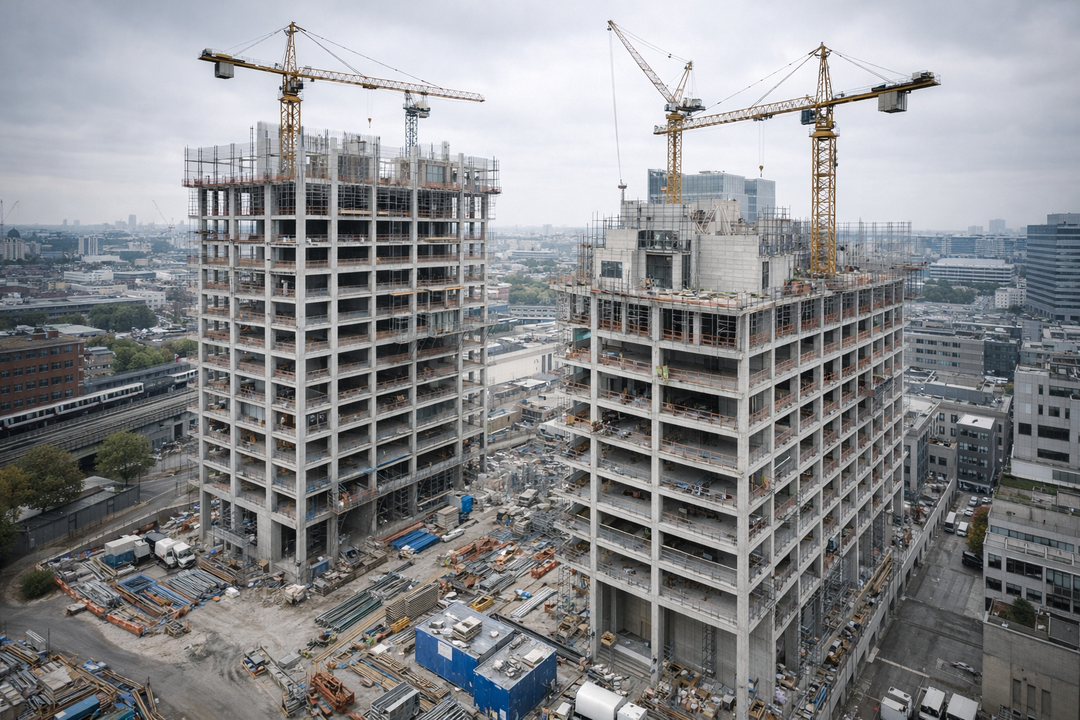

Navigating the 2026 Building Safety Regulator (BSR) Transition: What Principal Designers Need to Know
April 2026 is no longer a distant date. It marks a critical milestone in the UK’s new building safety regime, with the Building Safety Regulator (BSR) officially transitioning to an fully independent body. For Principal Designers, the grace period is over, full competency and rigid adherence to the 'Gateway' system are now the baseline requirement for High-Risk Buildings (HRBs).
"The transition to a fully independent BSR is the moment the legislation truly finds its teeth," says Sarah Jenkins, Head of CDM Services at Aspis. "We are seeing a shift from 'intent to comply' to 'proof of compliance.' If a Principal Designer cannot produce a digital audit trail of safety decisions, the BSR will simply halt the project at Gateway 2. There is no middle ground anymore.
The timeline set out by the Building Safety Act 2022 is accelerating. While previous phases focused on registration and introductory frameworks, 2026 brings the implementation of the BSR’s full enforcement powers. This transition places the Principal Designer (PD) role under unprecedented scrutiny. The responsibility for ensuring that a building is safe by design is now directly auditable by a powerful, independent regulator.
The New BSR Landscape: Independence Means Enforcement
The primary change is the BSR’s status. Operating independently, the regulator will have the autonomy and the mandate to rigorously police the planning and construction process. The soft-launch approach of the past two years will be replaced by a culture of stringent oversight.
"The transition to a fully independent BSR is the point where the new regulatory framework finds its teeth," says Carl Morgan, Managing Director & Founder of Aspis Consulting Group
. "We expect to see a much higher volume of documentation audits and potentially proactive on-site inspections. For PDs, this means 'close enough' is no longer an option. Every design decision must be justified, documented, and clearly show a prioritization of safety over cost or speed."
For Principal Designers, this means that every design submission, every risk management plan, and every 'Gateway' application will be evaluated by an entity whose sole metric of success is demonstrable building safety.
:quality(80):format(webp))
The Competency Standard: Not Just Training, But Demonstrable Mastery
Perhaps the most significant shift for Principal Designers is the explicit requirement for 'competence.' It is no longer sufficient to hold a particular title or certification. The BSR expects PDs to prove they possess the requisite skills, knowledge, experience, and behaviours specifically for the project in question, especially HRBs.
"Many professionals still hold a misconception that their existing credentials automatically grant competency under the new Act. The BSR has been very clear that competence must be context-specific. A Principal Designer for a simple three-story build cannot automatically step into the same role for a complex, 18-meter-plus residential complex without demonstrating a deep understanding of the unique risks associated with the latter." -- Carl Morgan
The industry must move from checking boxes to validating true expertise.
Master the Gateways: Your Plan of Attack
The heart of the new regime is the three-stage Gateway system. While Gateway 1 (Planning) is well-established, 2026 will see the BSR enforce Gateways 2 (Pre-Construction) and 3 (Completion) with a new level of strictness.
Gateway 1: The Planning Hurdle
Gateway 1 occurs at the planning application stage. Its primary purpose is to ensure that fire safety is considered at the very beginning of the design process, rather than as an afterthought.
Gateway 2: The "Hard Stop" Before Construction
Gateway 2 is the most significant shift in the 2026 landscape. It is a rigorous permit-to-build. You cannot begin any construction work on an HRB until the BSR has approved your full, detailed design application.
Find out More
Gateway 3: The Final Hurdle to Occupation
Gateway 3 occurs at the completion of the build. This is the "as-built" verification. Without a Completion Certificate from the BSR, the building cannot be registered or occupied.Gateway 3: The Final Hurdle to Occupation
Gateway 3 occurs at the completion of the build. This is the "as-built" verification. Without a Completion Certificate from the BSR, the building cannot be registered or occupied.
Five Strategic Steps for Principal Designers in 2026
To navigate this transition successfully, Principal Designers must act now to internalize these changes.
Undertake a Competence Audit: Critically assess your own skills and your firm’s capabilities against the BSR’s Competence Framework. Identify gaps and invest in specialized training or recruit specific expertise.
Elevate the Fire Strategy: The Fire Safety Act 2021 and its extensions mean fire strategy must be a primary, integrated component of the design from the very first concept sketch, not a bolt-on addition.
Embed the Golden Thread (Digitally): Don't rely on paper files. Establish a rigorous, digital Common Data Environment (CDE) now. Ensure every design revision, approval, and product specification is logged, time-stamped, and easily accessible for years to come.
Practice 'Proactive' Auditing: Do not wait for the BSR to find a non-compliance. Engage independent compliance and auditing specialists, like the team at Aspis, to conduct pre-emptive 'Gateway 2 dry-runs' of your documentation.
Review Insurance and Liabilities: Open a dialogue with your professional indemnity insurers. They are reassessing risk in light of the BSR’s increased enforcement powers and the long-term liabilities associated with HRBs.
How Aspis Consulting Group Safeguards Your Business
At a deeper level, this controversy highlights a classic policy tension:
avigating the BSR transition is complex, but you do not have to do it alone. Aspis offers integrated solutions to bridge the gap between regulatory expectation and practical design.
Compliance and Auditing: We provide independent, third-party audits of your designs and documentation, mimicking the rigor of the BSR.
Data & Digital Solutions: We can help implement robust CDE systems that secure your Golden Thread.
Specialist Fire Safety: Our fire engineers ensure your fire strategies meet and exceed the regulator's standards.
The 2026 transition is not just a regulatory hurdle; it's an opportunity to redefine safety standards. Contact Aspis today to discuss how we can partner with your Principal Designers to ensure your projects are safe by design and BSR compliant.